

Work That Determines How Long Finishes Last
Surface Preparation & Paint Prep in Cuyahoga Falls for identifying damage before coatings are applied
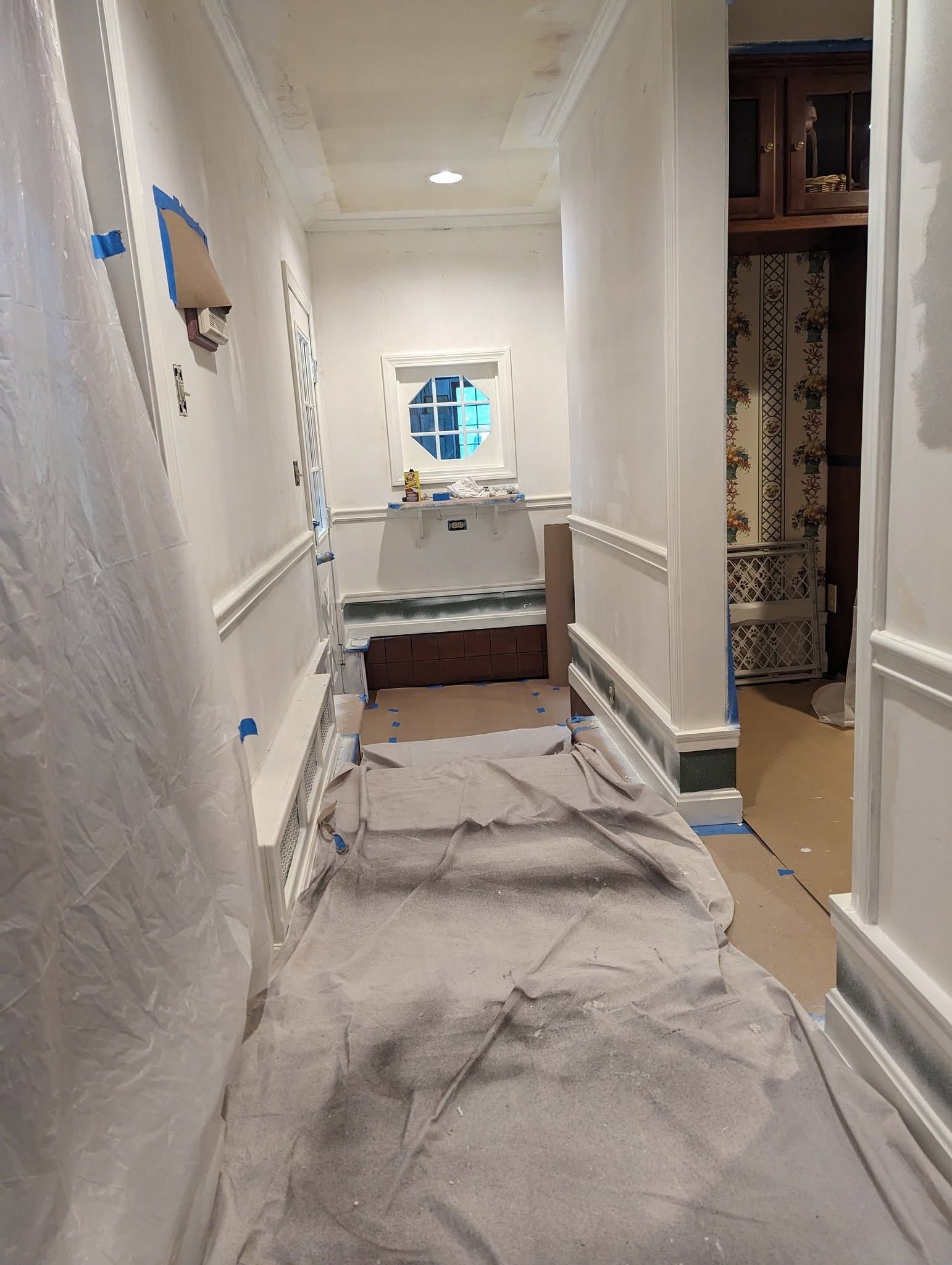
Professional prep work involves scraping loose paint down to stable edges, sanding uneven surfaces to create uniform texture, patching holes and cracks with appropriate filler compounds, caulking gaps where materials meet, and priming bare or repaired areas so finish coats adhere properly. This sequence addresses the underlying conditions that cause premature paint failure—poor adhesion, moisture infiltration, and substrate movement—rather than simply covering them with new color. Liberty Paintworks completes these steps on interior walls, exterior siding, trim, and other surfaces throughout Cuyahoga Falls where proper preparation directly impacts how many years the finish lasts before repainting becomes necessary.
Identifying damaged or deteriorated surfaces before painting begins prevents problems that only become visible after finish coats are applied, such as cracks telegraphing through new paint or peeling developing around improperly sealed joints. The inspection reveals whether wood has begun to rot, whether caulk has separated from substrates, and whether previous coatings are still bonded or ready to fail.
Request a professional painting consultation to evaluate surface conditions and prep requirements.
How Preparation Addresses Paint Failure

Paint adheres through mechanical bonding to the texture of the substrate and chemical bonding between primer and topcoat layers, both of which fail when contaminants, loose material, or smooth glossy surfaces prevent proper contact. Sanding creates the texture needed for adhesion, while priming provides a bonding layer that's formulated to grip both the substrate and the finish coat. Skipping either step results in coating systems that separate when subjected to humidity changes, temperature fluctuations, or physical contact.
After thorough prep work, new paint maintains its appearance and protection for significantly longer periods because it's bonded to a stable, sealed surface rather than sitting on top of failing material. You won't see edges lifting around cracks, blistering where moisture has penetrated, or color wearing through in high-contact areas within the first few years. The finish remains smooth and uniform rather than developing the texture irregularities that show up when underlying problems weren't addressed.
Interior prep typically involves patching nail holes and drywall damage, while exterior prep requires more extensive work to address weathering, wood deterioration, and failed caulk joints. Each surface type demands specific repair materials and techniques—lightweight spackle for interior walls, exterior-grade wood filler for trim, elastomeric caulk for joints that expand and contract with temperature changes.
Answers to Frequent Service Questions
Property owners often ask about specific prep steps and how they contribute to lasting paint results, particularly regarding the time and detail involved.
What does scraping remove from surfaces before painting?
Scraping eliminates loose, flaking, or poorly adhered paint down to edges where the coating is still firmly bonded, creating a stable foundation that prevents new paint from lifting along with old layers underneath.
Why is caulking necessary during paint prep?
Caulk seals gaps between different materials and fills cracks where water can penetrate, which prevents moisture from reaching substrates and causing paint to blister, peel, or lose adhesion from behind.
How does priming improve paint adhesion?
Primer is formulated to bond with bare or repaired surfaces and provide a uniform substrate for finish coats, which is especially important on wood, patched areas, and surfaces with varying porosity that would otherwise absorb paint unevenly.
What preparation is different for exterior versus interior surfaces in Cuyahoga Falls?
Exterior prep addresses weathering damage, moisture infiltration, and failed caulk joints from seasonal temperature swings and precipitation, while interior prep focuses on surface smoothness and repairing minor damage from daily use.
When should damaged wood be replaced rather than repaired during prep work?
Wood that's soft, spongy, or visibly rotted has lost its structural integrity and won't hold paint even with filler applied, so those sections must be cut out and replaced with new material that's primed on all sides.
Liberty Paintworks prioritizes detail-oriented prep work that maximizes the life of interior and exterior finishes. Schedule an evaluation to review how proper surface preparation protects your investment in painting services.